

Unpacking the EU’s Packaging and Packaging Waste Regulation (PPWR)
The European Union’s packaging regulation takes effect in August 2026, but many companies worldwide are still unclear about requirements, deadlines, and specifications.
Several levers to reduce environmental issues related to packaging currently exist. Legislative frameworks could be designed to restrain demand, for example, by placing taxes on single-use products or promoting reuse. Frameworks could also enhance recycling through Extended Producer Responsibility (EPR), landfill and incineration taxes, or deposit-refunds. Or, frameworks could require design for circularity by means of recycled content standards, EPR eco-modulation, or by enforcing clean-up.
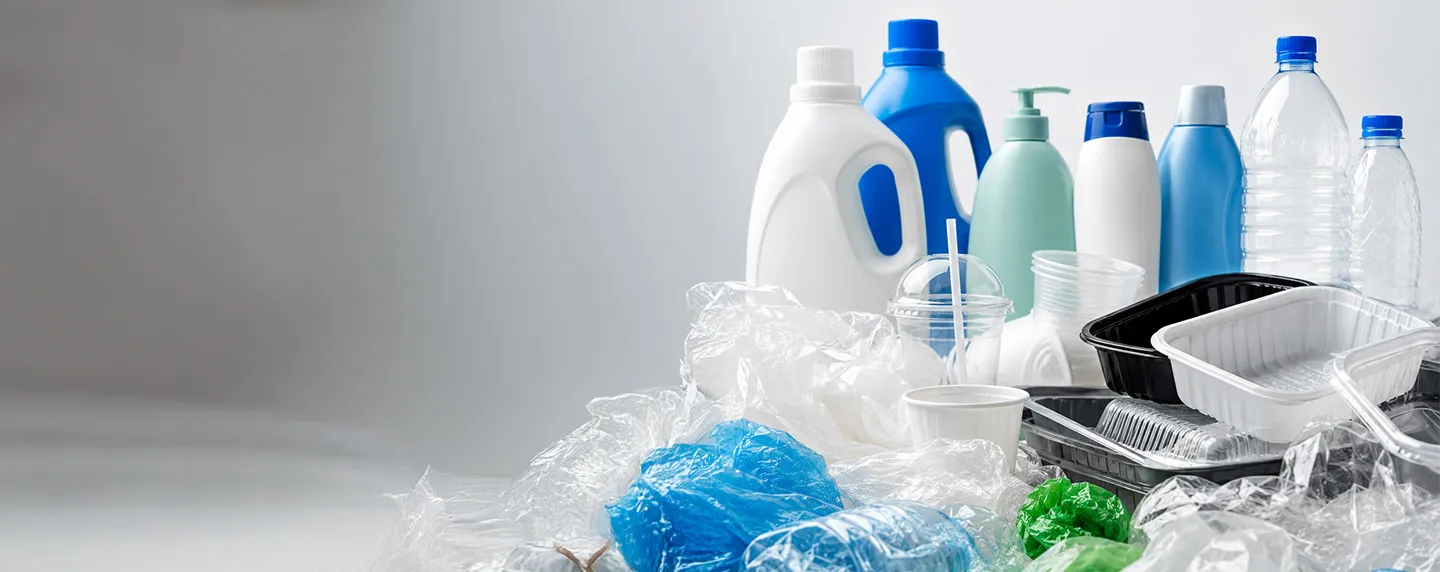
The Packaging and Packaging Waste Regulation (PPWR) pulls all these levers. PPWR is a comprehensive European Union (EU) law that establishes consistent requirements for packaging sustainability, recyclability, and labeling. The regulation aims to address the ever-increasing prevalence of plastic packaging waste, which, according to data published by the OECD Global Plastics Outlook, accounts for about 40% of the world’s total plastic waste, with Europe, China, and the United States contributing the greatest proportions. A white paper published by the Pew Charitable Trusts and ICF International Inc. in February 2026 warned that “Unless urgent action is taken, an additional 1 billion U.S. tons of plastic will be generated in the United States between now and 2040,” — and that means 30 million tons of plastic pollution would end up in U.S. lands and waters alone. Aside from the negative environmental impacts, packaging can also create inefficiencies and added costs for businesses, consumers, and taxpayers responsible for waste management.
Although many companies have already adopted more sustainable packaging practices and packaging laws exist across Europe, further action is needed. PPWR aims to mobilize these additional actions, encouraging business competition and innovation in Europe while protecting people and the environment.
PPWR entered into force on 11 February 2025 and will generally apply from 12 August 2026, when several obligations become binding. Ahead of that deadline, our EU team is examining the regulation to clarify which requirements are already established, which details are still being defined, and why waiting for complete certainty may create unnecessary risk.
What is the PPWR?
Formally designated as Regulation (EU) 2025/40, PPWR’s primary objective is to advance the circular economy and support the EU’s larger goal of achieving climate neutrality by 2050. PPWR focuses on packaging and packaging waste management by setting sustainability and labeling requirements for packaging across its life cycle, including design, production, use, and waste management. The regulation also prevents unnecessary packaging and promotes reuse, refill, and recycling; and it harmonizes national measures to reduce trade barriers and competition distortions.
Who must comply with PPWR?
PPWR applies to economic operators that place packaging or packaged goods on the EU market. This includes manufacturers, importers, distributors, retailers, online sellers, and producers responsible under Extended Producer Responsibility (EPR) systems.
What packaging is covered by PPWR?
PPWR covers all packaging and packaging waste placed on the EU market, regardless of material or origin. This includes primary, secondary, tertiary, service, transport, and e-commerce packaging. The regulation also establishes requirements for packaging manufacturing, composition, reusability, and recoverability, as well as packaging waste prevention and management. While PPWR applies broadly, micro-enterprises are subject to lighter requirements.
When does PPWR apply?
PPWR entered into force on 11 February 2025 and will generally apply from 12 August 2026. Several requirements will be phased in later, with key milestones slated for 2030, 2035, 2038, and 2040.
What are the main sustainability requirements for PPWR?
PPWR is organized around several themes that work together to encourage package design that is less wasteful, more recyclable, clearly labeled, intuitive (common-sense), encourages reuse, refill, and collection, and finally, packaging that is fairer and safer for people and the environment. These themes are considered through the following seven categories.
Substances of Concern
Under PPWR’s Article 5, “substances of concern” define thresholds of allowable quantities of certain substances depending on the intended final product. Substances of concern include heavy metals and per- and polyfluoroalkyl substances (PFAS) and must be reduced to a defined minimum. Though these substances are considered concerning due to their chemical makeup and persistence within the environment, PPWR does not limit these substances solely for these reasons as other EU regulations more directly address food safety and human health concerns.
Instead, these strict limits are in place within PPWR specifically to ensure the sustainability of packaging and improved circularity, especially reuse and recycling. In subsequent reviews of the PPWR language, the EU Commission will consider strengthening restrictions on substances of concerns if unacceptable human health risks are found to be associated with quantities of those substances defined in the current legislation. Strict limits for substances of concern will be enforced as of 12 August 2026.
Recyclability
Article 6 of PPWR explains that all packaging placed on the market will have to be recyclable. Article 6 further defines recyclability as product packaging being designed specifically with recyclability in mind, first of all. And then once the packaging becomes waste, it can be collected separately and sorted into specific waste streams without compromising the recyclability of other waste streams at scale.
Manufacturers must assess packaging recyclability using the criteria established through the delegated and implementing acts adopted under Article 6. Each packaging format will receive a recyclability performance grade of A, B, or C, as defined in Table 3 of Annex II. Beginning 1 January 2030 — or 24 months after the relevant delegated acts enter into force, whichever is later — packaging may be placed on the EU market only if it achieves grade A, B, or C (subject to the exemptions). The grades are denoted as follows:
- Grade A: Performance of 95% or more by weight recyclability
- Grade B: Performance of 80% or more by weight recyclability
- Grade C: Performance of 70% to 79% by weight recyclability
- Below Grade C: Less than 70% recyclable, classified as non-recyclable
By 1 January 2028, the Commission will adopt supplementary guidance on recyclability criteria, and from 2035 on, packaging must be “recycled at scale.” After 2038, all grade C packaging (less than 70%) will be prohibited entirely.
These grades of recyclability also help drive producers to meet EPR obligations. Reducing EPR fees can be achieved through eco-modulation, known in plain language as choosing more recyclable materials to improve post-consumer recyclability. (Learn more about EPR and eco-modulation in our extended interview with SCS Consulting Services’ EPR team.)
Recycled Content
PPWR introduces minimum post-consumer recycled content requirements for plastic packaging beginning in 2030, with higher targets in 2040, while certain packaging types may be exempt or subject to specific rules. The EU Single-Use Plastics Directive (2019/904) precedes PPWR with 25% rPET in PET beverage bottles by 2025 and 30% recycled content in all plastic beverage bottles by 2030.
Compostability
PPWR’s Article 9 addresses compostable packaging. While PPWR clearly prioritizes recyclability, compostability is acceptable for specific packaging categories, such as sticky labels on produce, lightweight plastic carrier bags, and biodegradable packaging made of plastic polymers, which must be industrially compostable.
Packaging Reduction
At EU Member States’ level, per-capita packaging waste must be reduced against the 2018 baseline: –5% by 2030, –10% by 2035, and –15% by 2040 (see Article 43). At product level, the empty space ratio must be ≤ 50% for grouped, transport, and e-commerce packaging (as of 1 January 2030). Product-level minimization obligations require that packaging weight and volume be reduced to the minimum necessary for functionality, safety, hygiene, and integrity, with marketing or consumer acceptance explicitly excluded as justification for additional packaging.
As an example, a sustained reduction of plastic carrier bags is considered to be achieved if the annual consumption does not exceed 40 lightweight plastic bags used per person by 31 December 2025 (and, subsequently, every end of December thereafter). (See Article 34.)
Reuse and Refill
As a part of the larger goal of reducing and ultimately preventing plastic packaging from entering the market, PPWR introduces reuse and refill targets from 2030 on. In terms of everyday applicability, reuse and refill mandates expect that:
- 10% of alcoholic and non-alcoholic beverages be made available in reusable packaging (with exemptions for wine, aromatized wines, milk and dairy, and highly perishable beverages);
- 40% of transport packaging (pallets, bulk containers, straps, etc.) be made in a reuse system;
- 10% of grouped packaging; and
- 100% for specific B2B intra-group flows.
These targets rise to 40%, 70%, and 25% respectively by 2040. The establishment of a Deposit Return Scheme (DRS) for single-use plastic beverage bottles and metal cans with capacity up to three litres mandates at least 90% collection per year by weight by 1 January 2029.
Labelling, Marking and Information
From approximately mid-2028, packaging placed on the EU market must carry harmonized labels that clearly communicate material composition, recyclability, and instructions for separate collection. PPWR also mandates that environmental claims (recyclable, compostable, biodegradable) be substantiated against standardized criteria, in line with the EU Green Claims Directive. A Digital Product Passport (DPP) with QR codes or other open, digital data carriers will be phased in via implementing acts so that packaging can be tracked through various reuse and recycling systems.
What parts of PPWR are already in place?
PPWR officially entered into force in early 2025. While the sweeping law operates on a phased timeline stretching to 2040, substantive requirements become enforceable on 12 August 2026. The most critical parts and immediate obligations for this August 2026 deadline include:
- PFAS Ban: Intentionally added per- and polyfluoroalkyl substances (PFAS) are officially banned in food-contact packaging.
- Restricted Substances: Strict heavy metal limits (lead, cadmium, mercury, and hexavalent chromium) cap the combined concentration to 100 mg/kg.
- Documentation & Conformity: Manufacturers must issue an EU Declaration of Conformity and compile a Technical File evidencing PPWR compliance. Importers are required to hold copies of these documents.
What recycled content rules apply to plastic packaging?
PPWR introduces minimum recycled content requirements for plastic packaging beginning in 2030, with higher targets in 2040, while certain packaging types may be exempt or subject to specific rules. The full requirements of these various specifications are outlined in Article 7 (“Minimum recycled content in plastic packaging”) of the official text of the regulation.
The most time-relevant portion of Article 7 pertains to the requirements for plastic packaging that must be in place by 1 January 2030 (or, three years from the date of entry into force, whichever date is latest).
Any plastic part of packaging placed on the market must contain the following minimum percentage of recycled content recovered from post-consumer plastic waste, per packaging type and calculated as an average per manufacturing plant and year:
- 30% for contact-sensitive packaging made from polyethylene terephthalate (PET) as the major component, except single-use plastic beverage bottles;
- 10% for contact-sensitive packaging made from plastic materials other than PET, except single-use plastic beverage bottles;
- 30% for single-use plastic beverage bottles;
- 35% for plastic packaging other than those referred to in points (1), (2) and (3) of this paragraph.
Adhesives, paints, and inks are not deemed plastic under the PPWR and therefore do not need to fulfill the recycled content requirements. This is regardless of whether they represent less than 5% of the packaging unit.
What labelling changes are required under PPWR?
Under Article 12, PPWR mandates that by 12 August 2028 all packaging placed on the market must use a harmonised EU-wide labelling for packaging material composition, sorting instructions, and recycling bins. PPWR emphasizes the importance of using accessible labels that reduce reliance on any single language. Compliant labels will be based on pictograms and “be easily understandable” for all, including people with disabilities, and will need to convey reusability, recyclability, and compostability to consumers. Additionally, certain labels will need to bear a QR code or similarly standardized, open, digital data carrier that facilitates the tracking of the packaging, including the calculation of trips and rotations through reuse and recycling systems.
How does PPWR relate to Extended Producer Responsibility (EPR)?
PPWR strengthens and harmonises EPR obligations by linking producer responsibility, reporting, registration, cost recovery, and eco-modulated fees more closely to packaging recyclability and environmental performance. PPWR also changes how EPR applies to packaging. Key areas of overlap include:
- Eco-modulated fees: PPWR links national EPR fees to packaging recyclability grades, reducing fees for highly recyclable materials and increasing fees for packaging that is more difficult to recycle.
- Producer registration: Companies must register with national Producer Responsibility Organizations (PROs) to report packaging volumes and support cost recovery for end-of-life management.
- Design-based market access: EPR assigns responsibility for waste management costs, while PPWR establishes market-entry requirements. Packaging must meet applicable design-for-recyclability criteria before it can be sold in the EU.
- Harmonized labeling: PPWR establishes standardized EU-wide labels for packaging and recycling bins to help consumers sort waste correctly.
Learn more about EPR rollout in the United States, and read our in-depth interview about EPR and food safety.
What should companies do now to prepare?
Companies first need to get familiar with PPWR, understand what is at stake in the coming years and ensure their portfolio evolves fast enough to align with upcoming regulatory requirements. They can start with in-depth training on the regulation itself and its different implication, preparing by auditing packaging portfolios, mapping materials and formats, assessing recyclability and recycled content, reviewing labeling and documentation, identifying EPR obligations in each EU market, and planning redesigns ahead of phased compliance deadlines. Waiting for complete clarity may increase compliance risk. Taking action now, even by establishing data-management systems and identifying company-specific vulnerabilities, can help organizations prepare more effectively.
Have questions about PPWR? Need PPWR support? We’re here to help.
Please get in touch today by requesting a meeting with our team.

Marie Blazy
Program Manager, Sustainable Finance and CSRD
Stories to keep you in the know.
Understanding the Recent Food Safety Recalls and Mitigating Contamination Risks from Farm to Finished Product
Recent recalls involving lettuce, peppers, and sprouts serve as an unfortunate though timely reminder that fresh…

The New Rulebook for Land-Sector Carbon Accounting
We're taking a closer look at the GHG Protocol’s Land Sector and Removals Standard (LSRS) and what it means for…
Unpacking the EU’s Packaging and Packaging Waste Regulation (PPWR)
The European Union’s packaging regulation takes effect in August 2026, but many companies worldwide are still…
Food Safety Culture: Turning Compliance into Daily Practice
The summer 2026 outbreak of the parasite cyclosporia, which has contaminated certain produce items in grocery stores…
Does Your Food Safety Auditor Have the Right Stuff?
Drawing on decades of food safety auditing experience, Heena Patel shares how independent, trusted auditors help…