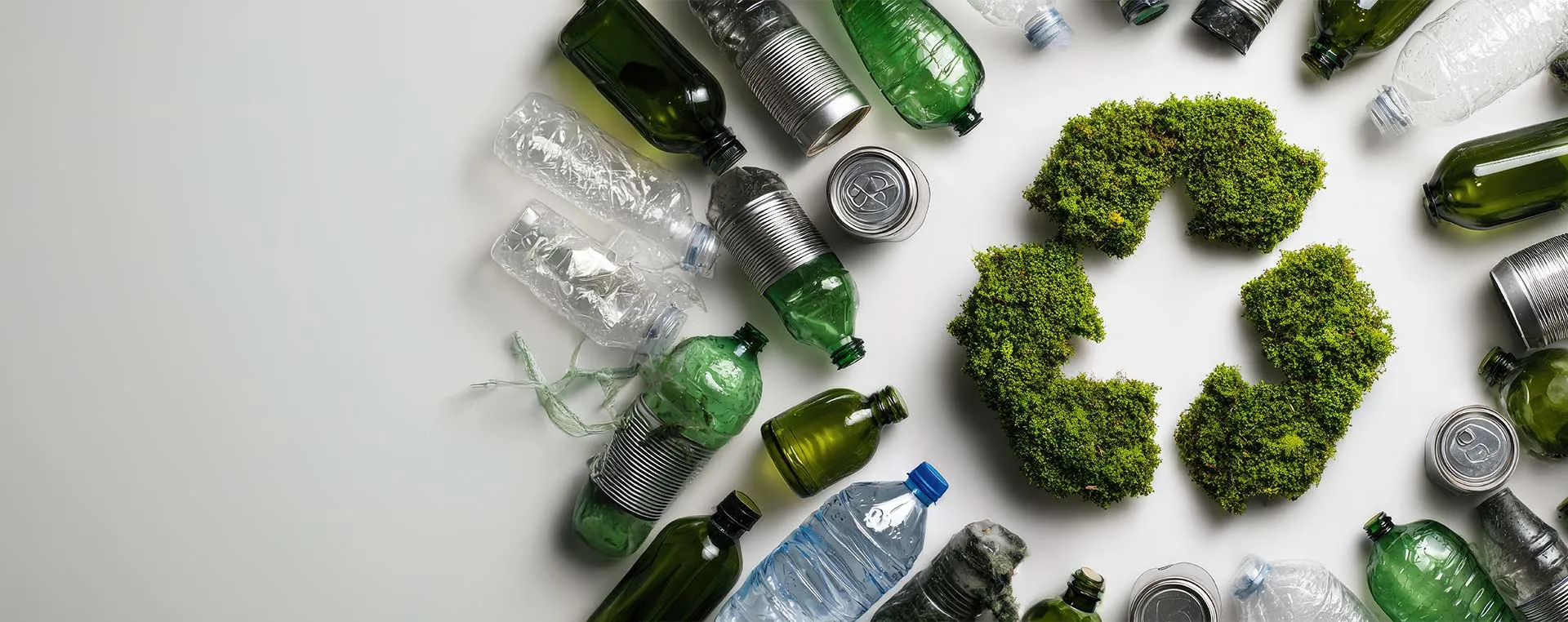


Unpacking Extended Producer Responsibility
First conceptualized in Sweden in the early 1990s, Extended Producer Responsibility (EPR) was eventually defined as an environmental protection strategy meant to decrease the total environmental impact of a product by promoting resource conservation, waste reduction, and the reuse and recycling of materials across the value chain. Since its introduction, EPR has focused on shifting the responsibility for a product’s total life cycle impact from individual consumers to manufacturers or suppliers — referred to as EPR producers — while ensuring financial and operational accountability for collection and downstream waste management. With higher expectations for the EPR producers to EPR regulations around the world, companies have taken a keen interest in navigating not only compliance but also how to leverage EPR technicalities to improve sustainability performance.
Recognizing the complexities of EPR, especially in terms of the food and beverage industry, we’re evaluating its implications and mobilizing insights to guide sustainable practices in the food and beverage sector (F&B). Today we’re having a strategic dialogue on EPR implementation with SCS Consulting Services’ Vice President of Food Safety, Denise Webster, and Managing Director of ESG Strategy, Neil Mendenhall.
For those new to the concept, could you explain what EPR is and why it’s becoming such a hot topic?
Neil Mendenhall (NM): Extended Producer Responsibility, or EPR, is a policy approach where producers — meaning the companies that place products or packaging on the market — are held financially and operationally responsible for managing their products at end-of-life. In simpler terms, instead of local governments or taxpayers footing the bill for recycling and disposal, it’s now on the companies that use certain packaging for their products when supplying them to the market. This shift is designed to encourage companies to design more sustainable, recyclable products and packaging, while also minimizing material use and reducing waste.
EPR’s significance for today’s producers lies in how it fundamentally shifts both financial and operational responsibilities upstream — from municipalities and taxpayers to the producers themselves. This can be an intimidating prospect for producers that might not have had to consider these costs before.
Let’s talk about the different roles involved in EPR. For example, what entities would be considered a producer, and what does a producer do?
NM: In the context of EPR, the "producer" is defined by each state's regulations, and companies really need to review the individual state regulations with their legal counsel before determining how the definition will impact them. But a producer is typically defined as the company whose brand is on the product being sold on shelves or otherwise ending up in consumers' hands. That said, a producer can also be a brand licensee or be the first importer placing the product on the market in a regulated state. This means the producer is responsible for compliance, even if they do not manufacture the packaging or product themselves. Manufacturers, on the other hand, are the entities that physically create the products or packaging but may not be directly liable under EPR laws unless they also act as the brand owner, licensee or importer. Producers will need to collaborate with manufacturers and packaging suppliers to source more recyclable materials, reduce material usage, and lower their EPR-related costs.
Another important part of EPR management is the PROs or Producer Responsibility Organizations. PROs play a pivotal role in EPR programs as non-profit organizations that manage the collection, recycling, and reporting obligations on behalf of producers. PROs streamline compliance by overseeing the operational aspects of end-of-life product management, collecting fees from producers, and ensuring recycling targets are met. For example, the Circular Action Alliance (CAA) has emerged as the leading PRO in multiple states for paper products and packaging materials in the U.S., helping producers navigate complex regulations and achieve their sustainability goals efficiently.
In addition to brand owners or importers, a producer can also include packaging material producers who are directly responsible for unfilled food serviceware or packaging materials used in the online market. Even when a company is classified as a brand owner or importer, whether it is considered an “Obligated Producer” can vary significantly depending on factors such as local or global revenue, covered material exemptions, quantities of individual or total material supplies, and the specific requirements of state or provincial EPR regulations. These variations illustrate the inherent complexity of EPR and the need for producers to carefully assess their responsibilities in each jurisdiction.
A shortened answer to this question would be: PROs facilitate compliance and recycling for producers, who are predominantly the brand owners or first importers, while manufacturers focus on production of the materials subject to EPR fees. Manufacturers may support producers with data and packaging solutions.
Could you elaborate on what EPR compliance actually looks like for a producer? What are the main steps?
NM: First, companies need to determine if they’re in scope — which products, which states, and whether they exceed the reporting thresholds (which can differ by state and product type). Next, they must register with a PRO — most states have chosen the CAA to administer their programs. Once registered, they are responsible for identifying the covered material categories associated with the applicable fee schedule, as well as for collecting and reporting the types and quantities of packaging they place on the market. Based on this data, they’re assessed fees, which are typically higher for less recyclable or non-recycled packaging. Fees are paid annually or in installments, and there are regular reporting and record-keeping requirements.
Who actually gets billed for EPR fees — the product manufacturer or the packaging supplier?
NM: It’s a common point of confusion. The “producer” is usually defined as the company whose name is on the product, as in the brand owner or first importer placing the product on the market in a state. So, if you’re a food company selling frozen dinners, you’re responsible, even if you didn’t manufacture the plastic tray or film that packages your product. Producers often turn to their packaging suppliers, though, for help sourcing more recyclable or lower-fee options.
Can you break down how these fees are calculated, and are they as significant as some fear?
NM: The fee schedule of EPR program is designed on a per-unit mass basis, considering the types and quantities of materials supplied to a market, as well as the costs of collection, disposal, and recycling determined through the needs assessment. Fees are calculated based on the type and volume of packaging you sell into a state, with higher fees for materials that are harder to recycle or have less recycled content. We’ve heard from several producers who’ve been surprised — sometimes even shocked — by how high these fees can be, especially for complex or non-recyclable materials. There’s a real financial incentive to design packaging that’s lighter, more recyclable, or compostable.
Is there any way for companies to lower their EPR fees?
NM: Yes, and that’s where “eco-modulation” comes in — a fancy term for fee reductions based on environmentally preferable packaging choices. If you use more recycled content, design for recyclability, or minimize the amount of packaging used, you may qualify for lower fees. Some states are also starting to recognize compostable packaging in their fee structures.
We gather some producers will be wondering if participation in EPR programs is voluntary or mandatory. Can you speak to this?
NM: That’s a key distinction. While early EPR programs in the U.S. were often voluntary, we’re now seeing a strong shift to mandatory state-level laws, especially for packaging, electronics, and other hard-to-recycle items. These laws require producers to join PROs, report their packaging data, pay fees, and meet recycling or recyclability targets. Non-compliance can bring significant penalties, so this is definitely not optional anymore in many states.
Why has EPR gained such momentum, and who is most affected?
NM: The movement’s really about shifting responsibility upstream to those with the greatest ability to make changes — manufacturers and brand owners. EPR is especially significant for industries with high volumes of packaging waste — like food and beverage, consumer goods, and electronics. The goal is not just to manage waste, but to drive eco-friendly products and packaging design, reduce resource use and disposal, and support a circular economy.
Denise, you have more than two decades of experience in the food and beverage sector. Can you walk us through how EPR intersects with food safety regulations in your industry?
Denise Webster (DW): In food and beverage, packaging isn’t only about getting products to consumers — it’s tightly regulated for food safety, too. F&B producers already gather a lot of information from suppliers to ensure packaging meets safety standards. Now, with EPR, they’re being asked for even more: details on recycled content, recyclability, and sometimes bio-based content. The real challenge is that sometimes what’s best for food safety isn’t always the most recyclable option. For example, certain coatings or materials that ensure food stays fresh can make recycling more difficult.
NM: That’s exactly right. Producers in this sector face a double mandate: ensure packaging is food-safe and meets EPR’s sustainability and recyclability requirements. Sometimes these priorities can conflict, so companies are having to innovate and look for solutions that meet both sets of standards.
Can we talk more specifically about what types of products and packaging are included under EPR, and which jurisdictions are leading the way?
NM: EPR laws for packaging typically focus on anything that ends up in consumers’ hands — think single-use items, direct-to-consumer packaging, takeout containers, cups, utensils, and even the trays and films used in pre-packaged frozen meals. There’s still some variation by state, but the scope is broad and getting broader. As of January 2026, seven states have formal EPR packaging laws: California, Colorado, Maine, Oregon, Minnesota, Maryland, and Washington. Canada is also active in this space, with provinces rolling out and working to harmonize their own EPR requirements.
DW: From a food and beverage perspective, it’s not just the obvious packaging like boxes and cans. It also includes multi-layer films, coated papers, and any materials that come into contact with food, as well as ancillary elements directly hung onto or attached to a product or that perform a packaging function. Some items are easier to recycle than others, so understanding what’s in scope is crucial for compliance.
What are the biggest compliance challenges you’re seeing, especially for food and beverage companies?
DW: For many of our clients, the major challenge is just understanding all these new requirements — what’s in scope, which products are affected, what data they need from their suppliers, and how to balance EPR with ongoing food safety obligations. The rules vary by state, and they’re evolving fast. It can be overwhelming for teams who are already stretched thin. Manufacturers are increasingly being asked by retailers and brand owners to complete questionnaires providing compliance-related details such as packaging material types and manufacturing processes.
NM: Agreed. Another complication is that compliance isn’t just a one-time thing — it’s ongoing, with annual reporting, record-keeping, and fee payments. Companies need robust systems to track packaging data, assess their exposure, and identify opportunities to minimize costs. The good news: a lot of the processes companies already use to collect packaging material specifications and supporting documentation from suppliers can be adapted to collect EPR-related data, streamlining the effort.
What practical steps do you recommend for companies just starting to address EPR?
NM: Start by mapping your packaging portfolio: What materials are you using? Which states are you selling into? Next, determine which EPR laws apply and whether you exceed exemption thresholds. Engage your packaging suppliers early — they can provide critical data on recyclability, recycled content, and other attributes. Then, register with the appropriate PROs and develop a system for ongoing data collection and reporting. If you’re unsure, seek expert help — this is a rapidly changing area, and accuracy matters.
DW: I’d add that it’s crucial to keep communication open across teams — food safety, sustainability, legal, procurement, and product development — since packaging materials and designs and the product development process can mutually influence each other, especially in the context of EPR compliance. These requirements touch every part of the business, and collaboration will help ensure a broader understanding of the impact and how the company can address this new challenge.
How do you see EPR evolving in the next few years? Are there efforts to harmonize requirements across states?
NM: Absolutely. More states are expected to pass EPR laws, and there’s a push for harmonization — so national brands aren’t dealing with a patchwork of standards. For example, Maine recently passed “Fix It” bills to align with newer state programs; and California, like Oregon and Colorado, has selected the Circular Action Alliance as its single PRO. The CAA is working to streamline compliance across multiple states. We’re also seeing EPR expand beyond packaging to textiles and other product categories.
DW: For food and beverage, practical strategies such as foldable paperboard designs and material simplification (mono-material packaging) are expected to help reduce material use and improve recyclability while maintaining food safety. Regardless of the innovation applied, packaging reformulation under EPR must not compromise food integrity or protection against contamination, and food packaging producers are explicitly required to continue meeting all applicable food-contact safety standards.
Editor: To wrap up, what are your top takeaways for readers?
NM: EPR is here to stay and growing fast at the state level. Customers are also increasingly requesting information on their compliance status. Start early, get organized, and stay informed. These requirements will only become more complex. There are real opportunities to improve sustainability and reduce costs if you approach EPR strategically.
DW: And don’t underestimate the value of collaboration — internally and with your supply chain partners. The intersection of food safety and EPR is challenging, but also a chance to drive positive change in the industry.
Have more questions about EPR? Schedule a free consultation with SCS Consulting Services.
Please note that SCS Consulting Services' guidance is not meant to constitute legal advice, and SCS Consulting assumes no responsibility for the decisions made by producers in determining their obligations. SCS Consulting suggests that producers work with their attorneys to review the relevant statutes, rules, and regulations to determine their responsibilities.
Stories to keep you in the know.

Why Life Cycle Assessments (LCAs) Matter for the Pharmaceutical Industry
What if measuring your pharmaceutical products’ environmental footprint could open doors that price alone never will…
Unpacking the EU’s Packaging and Packaging Waste Regulation (PPWR)
The European Union’s packaging regulation takes effect in August 2026, but many companies worldwide are still…

Beyond Compliance: Navigating EPR’s Packaging Trade-Offs
We’re zooming in on EPR-adjacent considerations such as source reduction, recyclability, and food safety to better…
New Research Gives the Fashion Industry an Updated Environmental Picture of Polyester Production
Textile Exchange and SCS Consulting Services release life cycle assessment for virgin and recycled polyester…

Extended Producer Responsibility (EPR) Rollout in the United States
What businesses need to know about U.S. packaging EPR laws and approaching 2026 deadlines